Last Updated: October 29, 2025
Portal Data & Form View
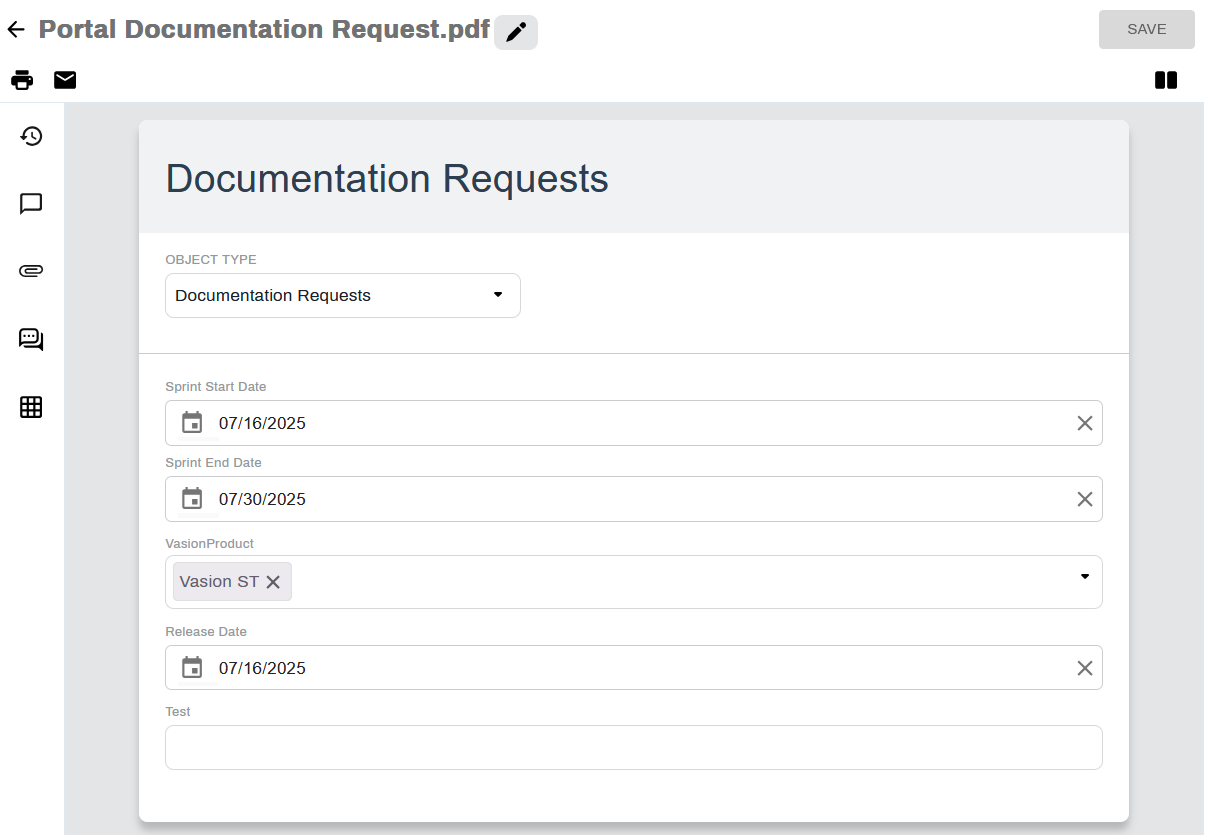
Data View
The Data View shows object data associated with the current document, but not the document itself. The Object field is displayed at the top followed by the object fields and their data.
If the document is not associated with an object, the only field that displays is the Object Type drop-down.
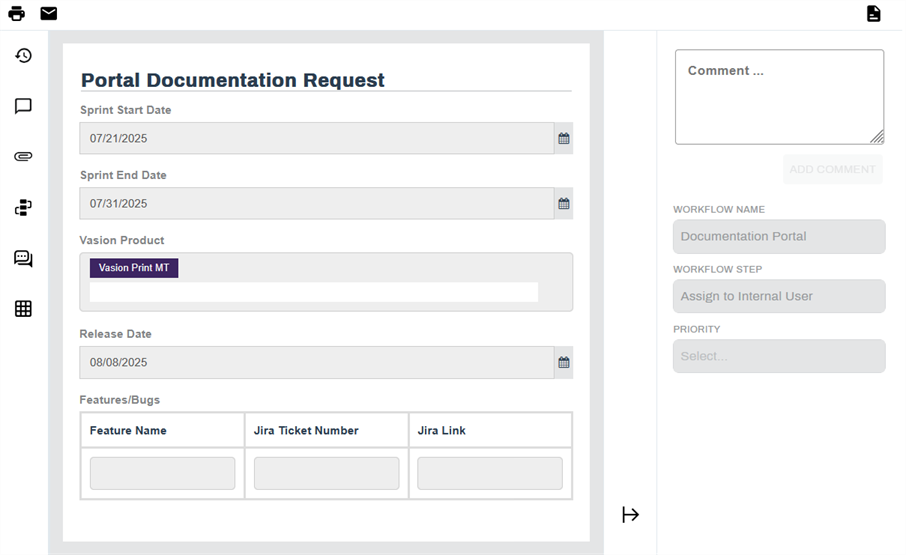
Form View
The Form View show the form that was used to initiate the current Workflow.
For more information about the Document Viewer in general and the views available, see Portal Document Viewer.
For more information about the External User Portal, see External User Portal User Guide.
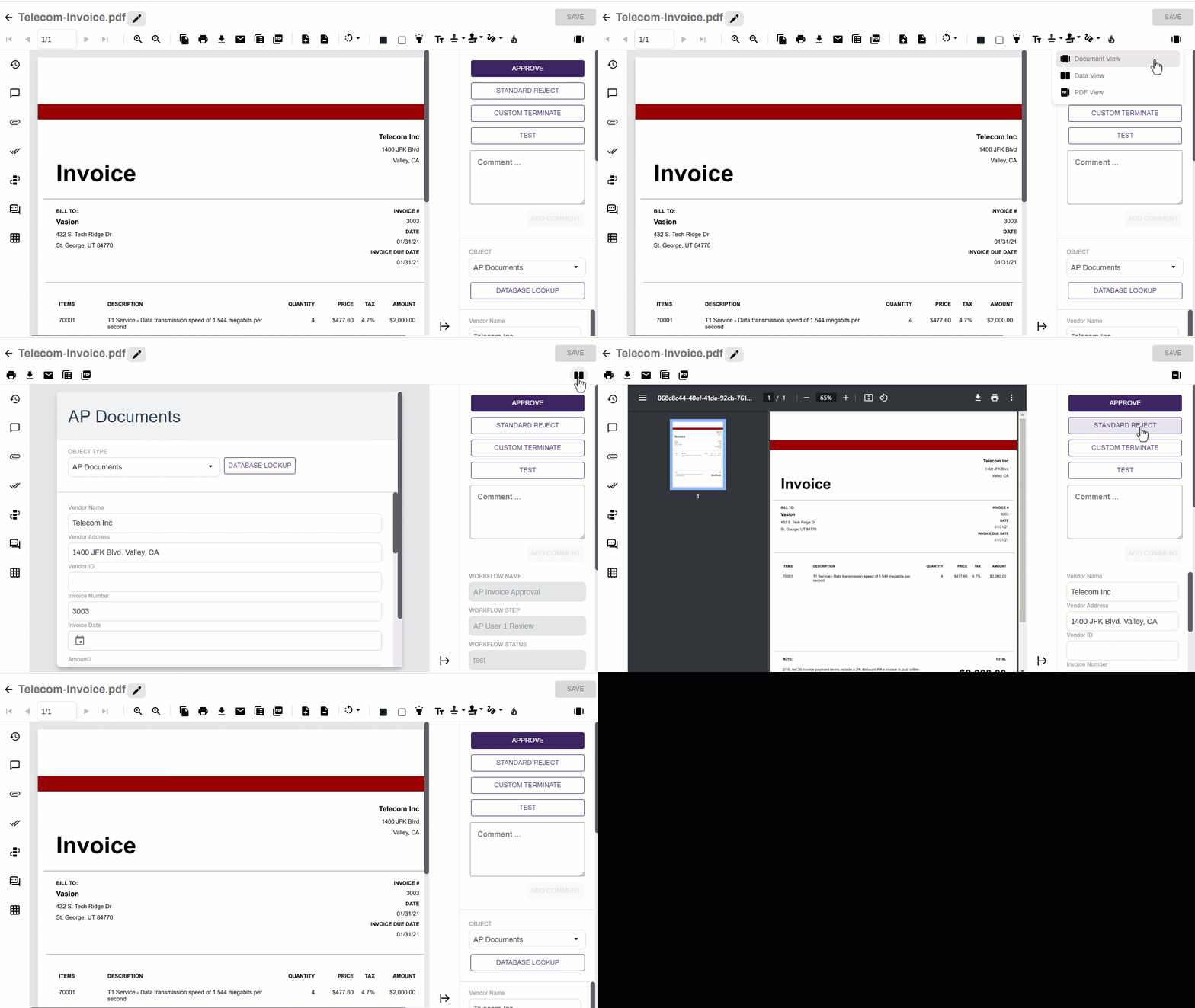
Switch to the Data or Form Views
To change the view on the current document use the view filter on right side of the tool bar.
- Select the view filter
 .
. - Select the view you want from the drop-down.
View Toolbar
The toolbar has the following functionality:
Depending on the selected document or form, not all buttons may display.

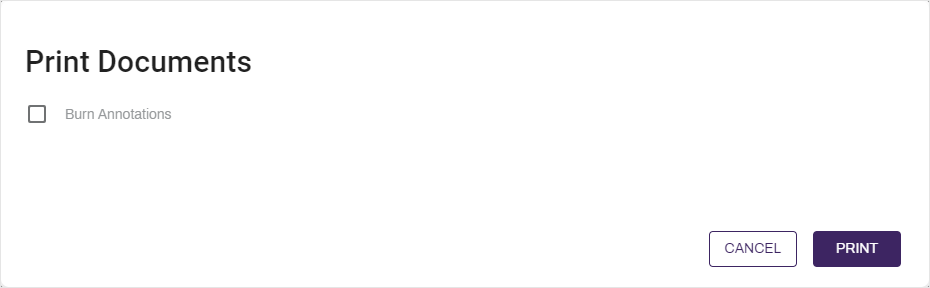
Print the selected document and any annotations. If the document is part of a signature workflow, you can also print the signature history.
- Select the Print button
 .
. - In the Print Documents modal, select from the following options:
- Burn Annotations — select this option to include unburned annotations on the document you’re printing.
- Include Signature Doc History – this option only displays if a document is part of a signature workflow. When selected, it downloads the current signature audit trail in a separate PDF.
- Select Print.
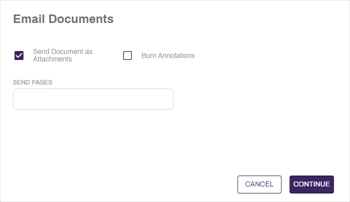
Use the Email button to send a message to someone with either with a link to the document or as an attachment on the email. Here are some of the options available when choosing email.
To send a document as an attachment, complete the following:
- Select the Send Document as Attachments button to send the document as an attachment to an email.
- Enter a number or series of numbers in the Send Pages field to limit which pages are sent as an attachment.
- Select the Burn Annotations button to apply all annotations to the document before sending.
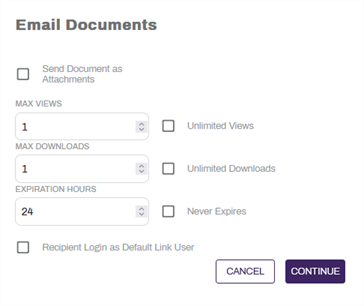
To send a link to the document, complete the following:
- Deselect the Send Document as Attachments button to send a link to a document.
- Set a maximum number of views for the document by entering a number in the Max Views field.
- To allow for unlimited views, select the Unlimited Views option.
- Set a maximum number of document downloads by entering a number in the Max Downloads field.
- To allow for unlimited downloads, select the Unlimited Downloads option.
- Set an expiration for the document in hours by entering a number in the Expiration Hours field.
- To prevent the document from expiring, select the Never Expires option.
- Select the Recipient Login as Default Link User to allow external users to automatically log in as the configured default link user. For more information on configuring the default link user, see email Optional Settings.
- Set a maximum number of views for the document by entering a number in the Max Views field.
Select Continue to continue to the next step.
-
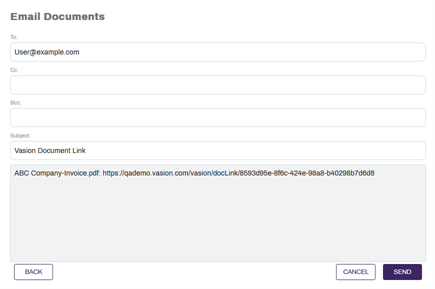
Enter an email address or addresses in the To, Cc, and Bcc fields for any recipients of the document.
-
Enter a subject in the Subject field.
-
Enter a message in the email body field.
-
Select the Send button to send the document.
For more details, see Email.
Side Bar
Utilize the Object Side Bar to initiate or progress a workflow, change object,
Workflow actions
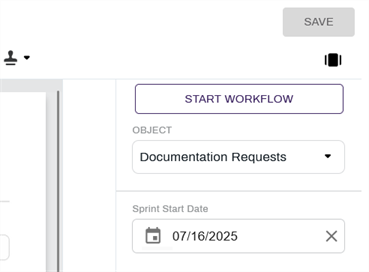
When viewing a document that is not in Workflow, select the Start Workflow button to initiate a workflow with the open document.
When viewing a document that is in workflow, the configured workflow action buttons will be displayed.
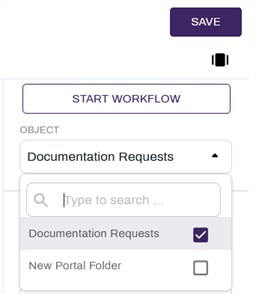
Select Object
Select the Object drop-down, then select an object to change the object.
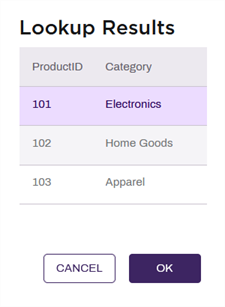
Database Lookup
When you enter one or more specific values into field, the Vasion Automate Pro system performs a database lookup and utilizes that value to search for and retrieve additional, related information. Once found, this related information is then automatically filled into other corresponding fields within the sidebar, eliminating the need for you to type it manually.
To use a database lookup:
- Select the Database Lookup button from the sidebar.
If there are multiple results for the lookup:
- Select the correct one from the Lookup Results modal.
- Select the OK button.
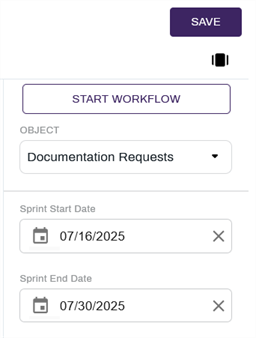
Edit Index Data
Enter data into the relevant index fields in the side bar, then select the Save button.
Document Info Bar
The toolbar on the left side of the window contains buttons for the document history, notes, versions, attachments and workflow comments. The options displayed on the toolbar depend on if there is an object or workflow that is associated with the document.

View Document History
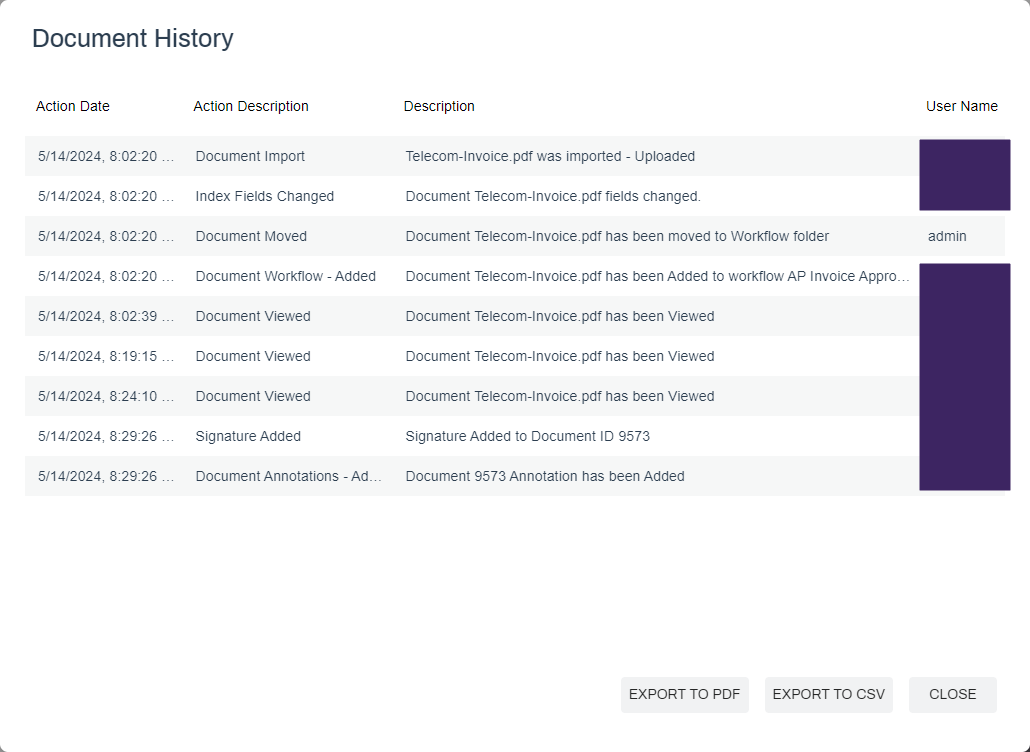
Document History  shows all of the actions that were taken on the document.
To view the history of a document, select the History button on the left side. In the Document History window, you can see the complete history, including entries for:
- When the documents were imported.
- When attribute fields were filled out.
- When a document was moved and the person that performed each task.
-
To export the history to a PDF, select the Export to PDF button.
-
To export the history to a comma-delimited (CSV) file, select the Export to CSV button.
-
Select the Close button to close the history.
Add a Note
The Notes button  shows a badge with a number that indicates if there are any notes attached to the document.
When you add a note to a document, the note is attached to the document itself and not visible on the document. It also won’t be visible on a printed or emailed copy of the document.
To add a note:
- Select the Notes button.
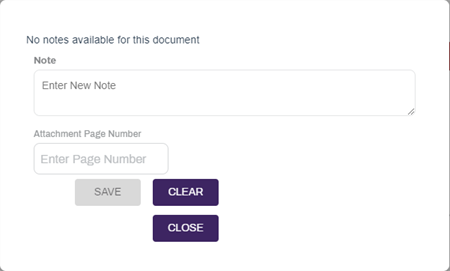
- In the Notes window type your note in the Note field.
- Add a page number in the Attachment Page Number field if you want to reference a specific page in the document.
- Select the Save button to save your note. The note appears in the notes area of the window.
-
Select the Close button.
View Workflow History
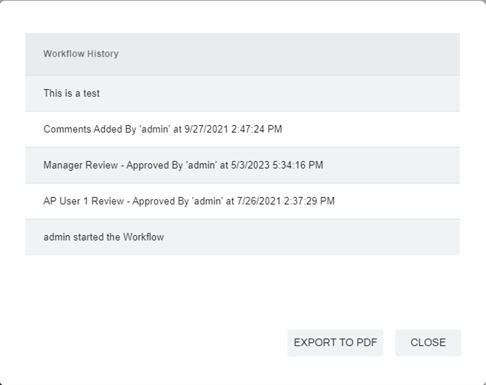
Any time an action is taken on a document when it is in a workflow, is recorded in the workflow history.
- Select the Workflow History button.
- To export the workflow history to PDF, select the Export to PDF button.
- When you're done select the Close button.
Attachments
The Attachments button  shows a badge with a number that indicates how many files are attached to the current document.
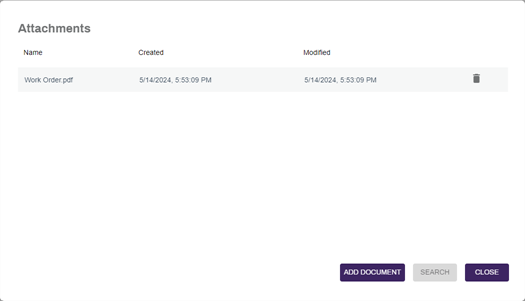
You can view any supporting documents or add documents by using the Attachments button.
- Select the Attachments button.
- In the Attachment modal:
- Select any existing attachment to view, if applicable, or
Select the Add Document button to add a document.
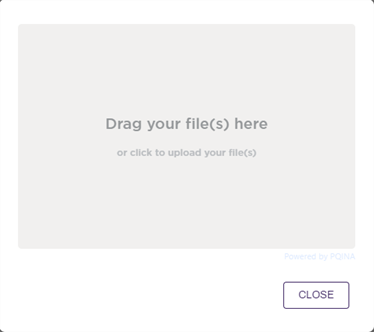
In the Upload modal, you can drag and drop the attachment into the upload section or select Browse to locate the file on your computer and select the attachment you want.
-
Select the Close button to close the Attachments modal.
Line Items
If the document was read by an Amazon Textract process, there will be one or more tables with the associated data stored with the document. The Line Items button  will bring up a display of any line item data that is associated with the document being viewed.
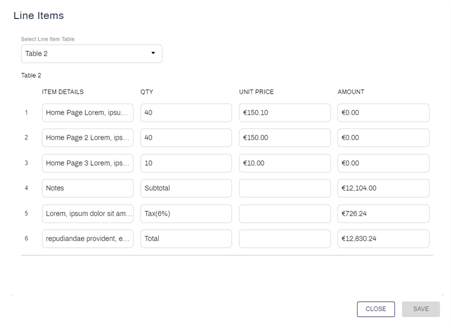
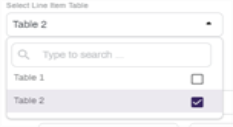
If there is more than one table associated with the document, you can use the Select Line Item Table dropdown to select which table to view.
Collapse Object Side Panel
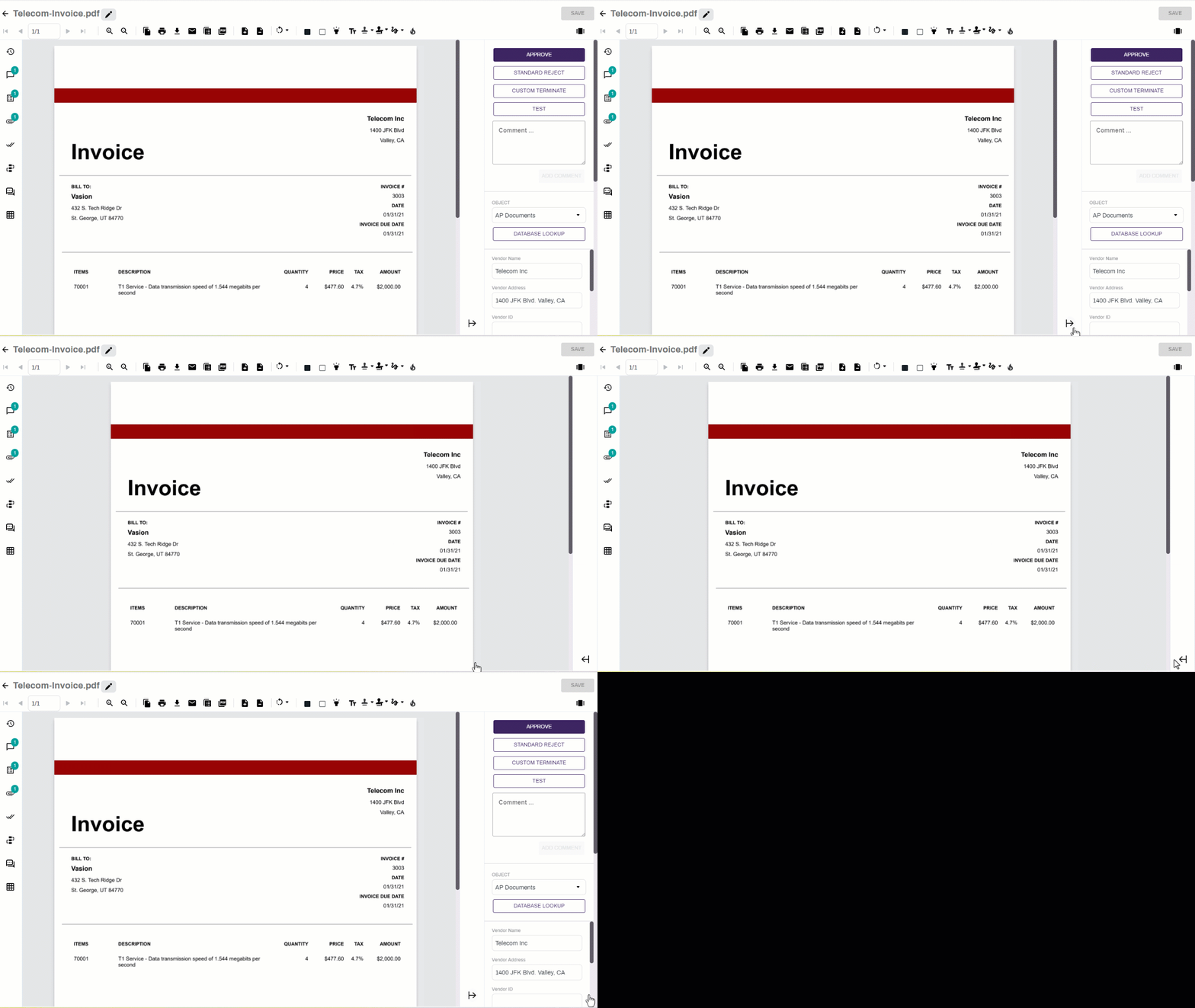
Select the Collapse button to collapse or expand the object side panel.